

Most people planning a hair transplant focus on the bald patch. Fair enough, that’s the part they see in the mirror. But the real starting point is somewhere else, at the back of your head. That’s your donor area, and it decides how much hair can be moved and how the final result looks. If you’re thinking about Hair Transplant Treatment in Ahmedabad, it helps to know where the grafts come from, how the area heals, and what happens to the hair that’s taken.
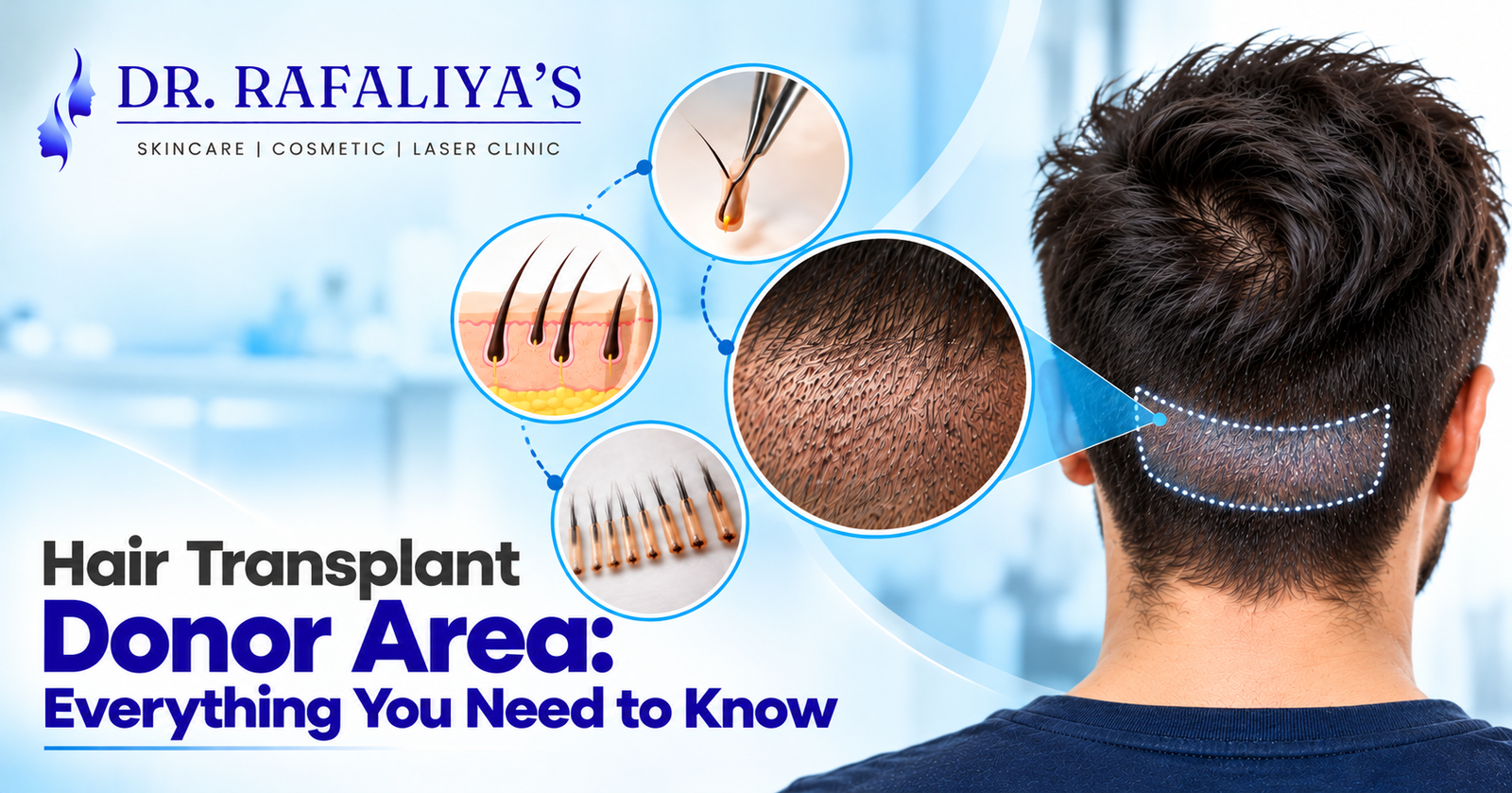
What Is a Hair Transplant Donor Area?
The donor area is the patch of scalp where follicles are collected from. In most men, it’s the back and sides of the head. Hair there tends to resist the kind of loss that causes pattern baldness, which is why it’s chosen.
The surgeon moves those follicles to the thinning or bald areas. The aim is to restore the hair without leaving the donor area looking worn out.
Why Is the Donor Area So Important?
Think of it as a limited bank account. You can only withdraw so much before it shows.
The density of hair there decides how many grafts are available at all. How carefully they’re taken matters just as much. Take too much from one patch, and the back of the head can look thin or moth-eaten. Your surgeon also has to think ahead, because hair loss usually continues over the years, and you’ll want enough donor hair left if you need more work later.
So a good plan looks after two things, the area being filled and the area being drawn from.
Where Does Hair Come From During a Transplant?
It depends on your hair density, the condition of your scalp, and the technique being used.
- Back and Sides of the Scalp: By far the most common source. Surgeons pick spots where hair is stable and dense enough to spare.
- Beard Hair: If the scalp can’t supply enough, beard follicles are sometimes used. Beard hair is coarser and behaves differently, so it’s better for adding density than for building a soft, natural frontal hairline.
- Body Hair: Chest or other body hair is occasionally considered too. It grows and cycles differently from scalp hair, and how well it works varies from person to person.
When there are enough good follicles on the scalp, that stays the first choice.
How Do FUE and FUT Affect the Donor Area?
These two methods leave different marks behind.
| Technique | How hair is collected | Effect on donor area |
|---|---|---|
| FUE (Follicular Unit Extraction) | Follicles are taken out one by one through tiny openings | Leaves small, dot-like scars, usually hard to spot when the area is well managed |
| FUT (Follicular Unit Transplantation) | A thin strip of scalp is cut out and split into grafts | Leaves a single-line scar that surrounding hair can often cover |
Neither one suits everybody. Your surgeon will look at your hair type, the hairstyle you prefer, how dense the donor area is, and what you want from the surgery before suggesting one.
Does Hair Grow Back in the Donor Area?
Not from the exact spots. With FUE, the follicle that’s taken is gone, so nothing regrows from that point. The hair around it stays, though, and usually hides the tiny extraction marks.
With FUT, the strip that’s removed doesn’t regrow either. The scalp is stitched shut, which leaves a scar line.
How long it takes to heal depends on the method, the number of grafts, and how your body recovers. Following the aftercare advice makes a noticeable difference.
How Can You Protect Your Donor Area After Surgery?
Aftercare is mostly common sense, but people skip it more than you’d think.
Wash your scalp the way your surgeon tells you to. Don’t scratch, rub, or pick at scabs, however tempting. Skip hard exercise until you’re cleared, and avoid tight caps or helmets that press on the healing skin. Go to your follow-up visits so the doctor can check progress. If your surgeon asks you to stay off cigarettes, do so, since smoking slows wound healing.
Also, don’t put oils, hair growth products, or medicated lotions on the donor area before asking your surgeon.
Is Your Donor Area Suitable for a Hair Transplant?
Donor capacity differs a lot from one person to the next. A proper assessment looks at hair density, how thick each strand is, scalp health, how far your hair loss has progressed, and how likely it is to continue.
Before choosing a hair transplant treatment in Ahmedabad , ask a few direct questions to the doctor. How many grafts can be safely taken? What kind of scarring should you expect? And can your donor supply cover what you want over the long run?
At Rafaliya's Skin Care Clinic, you can talk through your hair loss concerns and find out whether you’re a suitable candidate. Call 82001 42152 to ask about a consultation and see what options you have.
